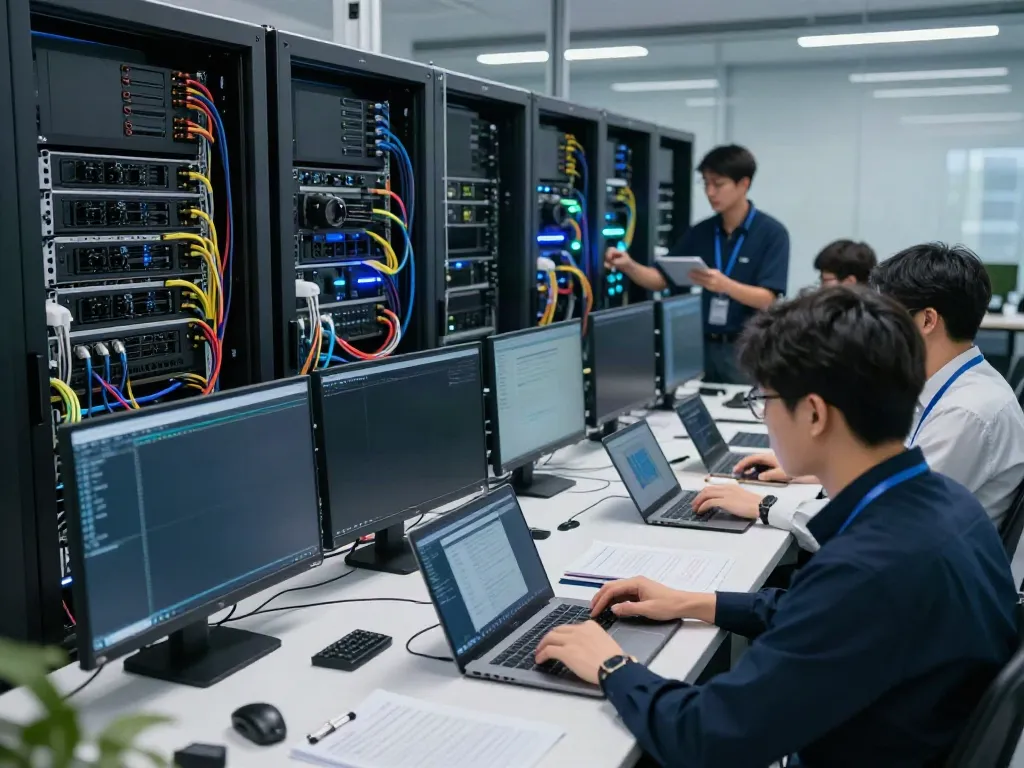
Understanding AI Infrastructure and Its Importance
As artificial intelligence (AI) continues to revolutionize various industries, the underlying infrastructure that supports its growth is becoming increasingly critical. AI infrastructure encompasses the hardware, software, and networking components necessary to develop, deploy, and manage AI applications efficiently. AI infrastructure serves as the backbone for AI operations, ensuring seamless integration and performance across various platforms.
What Is AI Infrastructure?
AI infrastructure refers to a comprehensive framework that includes not only the physical hardware but also the software stack required to support AI development. This infrastructure must be scalable, flexible, and robust enough to handle complex algorithms and large datasets while ensuring real-time processing capabilities. As organizations ramp up their AI efforts, understanding the components of AI infrastructure becomes essential for optimizing performance and resource utilization.
The Role of Hardware in AI Development
At the core of AI infrastructure is the hardware component, which includes powerful servers, high-performance GPUs, and specialized processors designed for AI tasks. The demand for significant computing resources is driven by the need to process vast amounts of data and execute intricate models. By leveraging hardware accelerators, such as TPUs and FPGAs, organizations can improve their AI workloads' processing speed and efficiency, crucial for real-time applications like autonomous vehicles and natural language processing.
Key Software Components in AI Infrastructure
In addition to robust hardware, AI infrastructure relies on various software components, including frameworks and libraries tailored for machine learning and deep learning. Libraries like TensorFlow, PyTorch, and Keras provide the necessary tools to build and train AI models effectively. Additionally, orchestration platforms enable seamless deployment and management of AI workloads across distributed environments, enhancing scalability and flexibility in AI operations.
Power Plans in AI Infrastructure
For organizations looking to participate in the AI token economy, understanding available power plans is crucial. These plans outline how energy resources are allocated to meet the processing needs of AI workloads while ensuring cost-effectiveness and efficiency.
Types of AI Infrastructure Power Plans
AI infrastructure power plans come in various forms, tailored to suit the specific needs of different organizations. Some plans focus on core power access, while others offer enhanced capabilities for larger-scale operations. This tiered approach enables businesses to choose a plan that aligns with their computational requirements and budget, providing flexibility as their AI initiatives evolve.
Calculating Contribution Rewards for Participants
One of the key advantages of participating in an AI power plan is the potential for contribution rewards. These rewards are calculated based on the amount of power supported by an individual's plan and the corresponding AI workloads processed. By tracking electricity usage and the tokens generated from AI services, participants can gauge their contributions and financial returns effectively.
Benefits of Joining the AI Power Network
Joining an AI power network provides numerous benefits for participants, including access to a reliable energy supply tailored for AI infrastructure. This can lead to lower operational costs and improved efficiency, allowing organizations to scale their AI capabilities. Furthermore, being part of a broader network fosters collaboration and knowledge sharing, driving innovation within the AI space.
How AI Infrastructure Supports Token Economies
The intersection of AI infrastructure and token economies is a game-changer. By facilitating tokenized AI services, organizations can create new revenue streams and enhance the overall value proposition of AI applications.
The Connection Between Power and AI Token Services
Power serves as the lifeblood of AI token services, where every computational task performed by AI infrastructure results in measurable tokens. Each interaction with an AI model generates input tokens processed and converted into output tokens. This token-based system not only tracks usage but also helps monetize AI services effectively, creating a sustainable economic framework.
Measuring AI Workload Performance
Success in the AI landscape hinges on accurately measuring workload performance. Effective measurement involves analyzing the power consumption associated with AI tasks, the efficiency of resource allocation, and the resultant token generation. By employing metrics and analytics, organizations can better understand their AI operations and optimize them for improved performance.
Understanding Token-Metered AI Services
Token-metered AI services represent a shift towards a more accountable and transparent AI ecosystem. By utilizing tokens as a unit of measurement, organizations can track AI usage more effectively and align it with energy consumption. This also paves the way for innovative pricing models based on actual usage rather than flat fees, enhancing the economic viability of AI solutions.
Building an Efficient AI Infrastructure
To maximize the benefits of AI infrastructure, organizations need to adopt best practices that focus on power allocation, scalability, and reliability.
Best Practices for Power Allocation
Effective power allocation involves assessing workload demands and ensuring that the necessary energy resources are available to meet those needs without overcommitting or underutilizing capacity. By leveraging predictive analytics and AI-driven insights, organizations can improve their power management strategies and reduce costs associated with energy usage.
Scalability and Reliability in GPU Operations
As AI applications expand, scalability becomes paramount. Designing infrastructure that can adapt to changing demands ensures that organizations can handle increased workloads without compromising performance. Additionally, implementing redundancy measures in power supply and computing resources helps maintain reliability during peak usage periods.
Real-World Applications and Case Studies
Several organizations have successfully implemented AI infrastructure power plans, showcasing their effectiveness in various industries. For instance, financial services firms utilize AI to analyze market trends, relying on robust GPU infrastructure to process large datasets rapidly. Similarly, healthcare applications leverage AI for diagnostic purposes, emphasizing the need for real-time processing and reliable energy resources to support these critical operations.
Future Trends in AI Infrastructure
As we look ahead, several emerging trends are expected to shape the future of AI infrastructure and power management.
Emerging Technologies Shaping AI Development
Technologies such as quantum computing and edge computing are poised to revolutionize AI infrastructure. Quantum computing offers the potential for exponentially faster data processing, while edge computing brings AI capabilities closer to the data source, reducing latency and bandwidth usage. These advancements will necessitate new approaches to power management and infrastructure design.
Anticipated Changes in Power Consumption Models
With the growing focus on sustainability, AI infrastructure will likely see a shift towards more energy-efficient models. Organizations may adopt renewable energy sources and implement smart grids to optimize power consumption. These changes will be crucial for reducing the carbon footprint of AI operations and aligning them with global sustainability goals.
Expert Predictions for 2026 and Beyond
Looking towards 2026 and beyond, experts predict significant advancements in AI infrastructure capabilities, driven by a combination of technological innovation and evolving market demands. The integration of AI and IoT technologies will create new opportunities for data-driven decision-making, while enhanced power management strategies will enable organizations to scale efficiently and sustainably.
What are the top benefits of participating in AI infrastructure?
Participating in AI infrastructure offers numerous advantages, including access to advanced computing resources, the opportunity to contribute to the AI token economy, and potential financial rewards based on power contributions. This participation also allows organizations to stay competitive in an increasingly data-driven landscape.
How can I measure the success of my AI infrastructure contributions?
Measuring success in AI infrastructure contributions involves evaluating the power consumption and the resulting tokens generated from AI workloads. Organizations can utilize analytics tools to track their performance and adjust their strategies accordingly.
What challenges should I expect when getting involved?
Challenges in participating in AI infrastructure may include navigating complex power management systems, understanding contribution rewards, and ensuring compliance with local regulations. Organizations must be prepared to address these challenges to optimize their participation.
Who can join the 51 AIpower network?
The 51 AIpower network is designed to accommodate a wide range of participants, including individual users, enterprises, and organizations interested in leveraging AI infrastructure. Participation is contingent upon meeting specific eligibility criteria and abiding by platform terms.
How does AI infrastructure impact business operations?
AI infrastructure directly influences business operations by enabling faster data processing, enhanced decision-making capabilities, and the development of innovative services. As organizations integrate AI into their operations, the underlying infrastructure becomes a key factor in their overall success.